Your First Sound Bath: What to Expect and How to Prepare
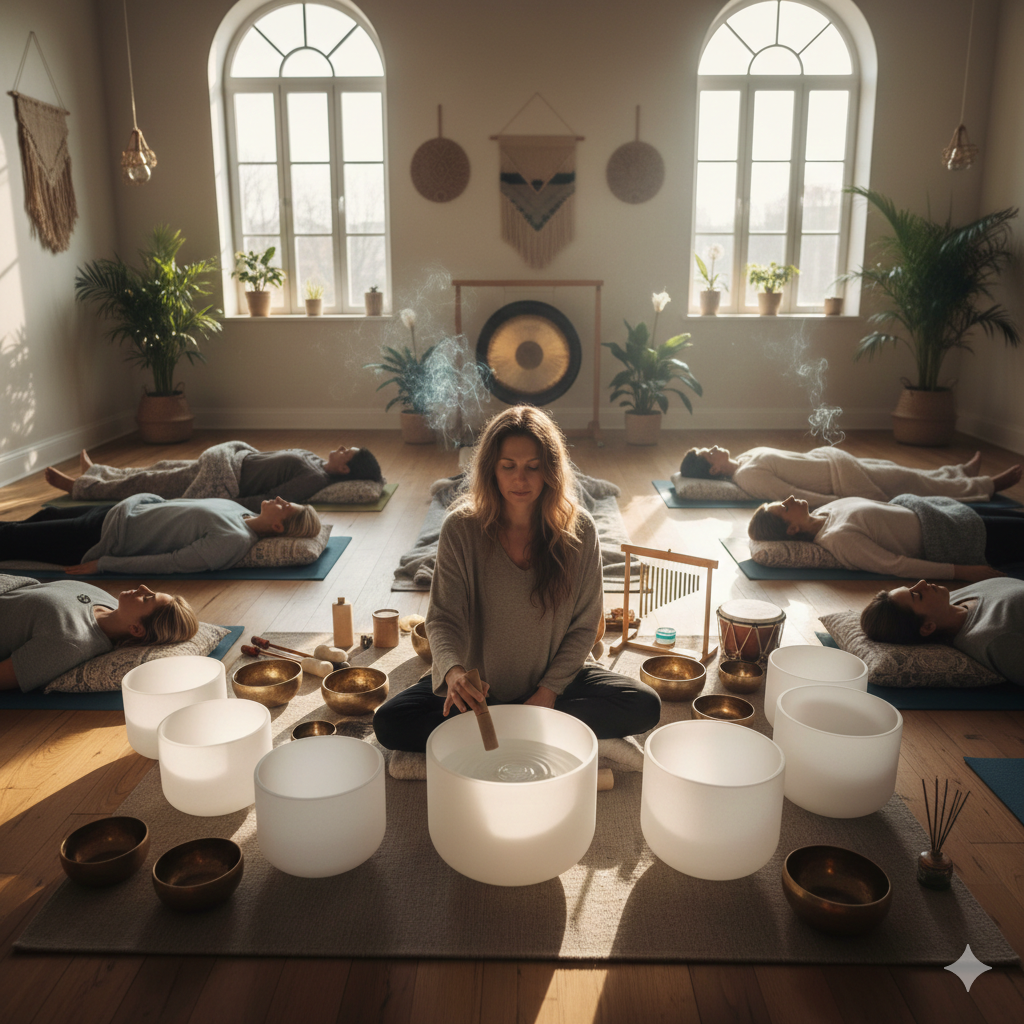
What Is a Sound Bath, Really?
Despite the name, a sound bath doesn't involve water—instead, you're immersed in waves of sound. It's a deeply meditative experience where you lie down comfortably while a practitioner plays therapeutic instruments like singing bowls, gongs, chimes, and tuning forks, creating a landscape of healing vibrations.
Unlike traditional meditation where you actively focus your mind, a sound bath is a passive practice. The sounds do the work for you, guiding your brainwaves into deeply relaxed states without effort or experience required. This makes sound baths accessible to everyone, from meditation beginners to advanced practitioners seeking deeper states.
The Science of the Sound Bath Experience
When you lie down for a sound bath, something remarkable happens in your brain and body. The sustained tones and rhythmic patterns trigger neural entrainment—your brainwaves begin synchronizing with the frequencies you're hearing.
Within minutes, your brain shifts from active Beta waves (13-30 Hz) associated with normal waking consciousness to slower Alpha waves (8-12 Hz) linked to relaxation. As the session deepens, many people drop into Theta states (4-8 Hz)—the realm of deep meditation, REM sleep, and subconscious access where profound healing and insight occur.
Simultaneously, your nervous system shifts from sympathetic (fight-or-flight) to parasympathetic (rest-and-digest) activation. Heart rate slows, blood pressure drops, stress hormones decrease, and healing mechanisms activate. This is why people often report physical sensations like warmth, tingling, or waves of energy moving through their body.
Before Your Sound Bath: How to Prepare
Physical Preparation
- Eat lightly: Have a light meal 1-2 hours before. A full stomach can be uncomfortable when lying down, but being too hungry can be distracting.
- Hydrate well: Drink plenty of water before and after. Sound healing moves energy, and water helps facilitate this process and flush released toxins.
- Avoid stimulants: Skip coffee, energy drinks, or alcohol before your session. You want your nervous system calm and receptive.
- Use the bathroom: Empty your bladder beforehand—sessions typically last 45-90 minutes without breaks.
- Wear comfortable clothes: Loose, non-restrictive clothing in layers. Studios can vary in temperature, and your body temperature may fluctuate during the session.
What to Bring
- Yoga mat: Most studios provide these, but bringing your own ensures comfort
- Blanket: Body temperature often drops during deep relaxation
- Pillow: For head support (many prefer small pillows or bolsters)
- Eye mask: Helps deepen relaxation by blocking light
- Journal: For recording insights or experiences afterward
- Water bottle: For hydration after the session
Mental and Emotional Preparation
Approach your sound bath with openness and zero expectations. There's no "right way" to experience a sound bath—some people have profound visions or emotional releases, others simply enjoy deep relaxation. All experiences are valid and exactly what you need in that moment.
If you're carrying heavy emotions or going through a challenging time, know that sound baths can catalyze emotional release. This is therapeutic and safe, but it helps to be aware that tears, laughter, or other expressions may arise. Practitioners are trained to hold space for whatever emerges.
During the Sound Bath: The Journey
Arrival and Setup (10-15 minutes)
You'll typically arrive 10-15 minutes early to settle in and set up your space. Choose a spot where you feel comfortable—some prefer edges of the room for a sense of containment, others like being central to the sound. There's no wrong choice.
The facilitator will usually invite you to lie down in savasana (corpse pose)—on your back with legs slightly apart, arms at sides, palms facing up. If this is uncomfortable, you can lie on your side, place a bolster under your knees, or sit propped against a wall. Comfort is essential.
Opening and Intention Setting (5-10 minutes)
Many practitioners begin with a brief welcome, explanation, and invitation to set an intention. Your intention might be healing, release, clarity, peace, or simply "whatever I need." Alternatively, you can set no intention and just receive.
Some facilitators lead a short breathing exercise or guided relaxation to help everyone settle in and shift out of busy-mind mode.
The Sound Journey (45-75 minutes)
As the sounds begin, you might notice:
- Physical sensations: Tingling, warmth, coolness, pressure, energy movement, or deep relaxation
- Emotional releases: Tears, joy, sadness, or other emotions surfacing and releasing
- Visual experiences: Colors, patterns, images, or visions behind closed eyes
- Mental shifts: Thoughts slowing down, mind quieting, or insights arising
- Time distortion: Time may seem to speed up, slow down, or disappear entirely
- Sleep or trance states: Drifting in and out of consciousness is completely normal
- Memories or insights: Past experiences surfacing or sudden clarity on issues
Some people remain aware throughout, observing the journey. Others drop so deep they remember nothing. Both experiences provide exactly the healing needed—your subconscious is always working, even when your conscious mind checks out.
Common Concerns and How to Handle Them
"What if I can't relax?" Don't try to force relaxation. Simply lie there and let the sounds wash over you. Relaxation will come naturally as your nervous system responds to the frequencies.
"What if I fall asleep?" Falling asleep is perfectly fine and extremely common. Your body still receives the vibrational healing, and the rest is clearly something you need.
"What if I need to move or adjust?" Move as needed. Gentle shifting to find comfort is fine and won't disturb others. If you need to sit up, do so slowly and mindfully.
"What if emotions come up?" Allow them. Emotional release is healing. Tears, sighs, or other expressions are welcomed in the space. You're safe to feel whatever arises.
"What if it's too loud or intense?" Sound baths can be surprisingly powerful. If it feels overwhelming, you can place your hands over your heart as a grounding gesture, open your eyes briefly, or if needed, quietly leave the room to take a break.
After the Sound Bath: Integration
The Closing and Return (5-10 minutes)
The facilitator will gradually bring the sounds to a close and guide you back to waking consciousness. Take your time returning—rushing back can feel jarring. Begin with small movements: wiggle fingers and toes, gently roll side to side, and when ready, slowly transition to a seated position.
Many people feel lightheaded, spacey, or emotionally tender immediately after. This is normal—you've been in a deep altered state. Ground yourself by sitting quietly, drinking water, and placing hands on the earth or floor.
Immediate After-Effects
In the hours following your sound bath, you might experience:
- Deep relaxation and peace
- Increased emotional sensitivity
- Heightened awareness and clarity
- Fatigue and desire to rest
- Vivid dreams that night
- Continued energy movement in the body
- Emotional releases continuing to process
Self-Care After Your Sound Bath
- Hydrate abundantly: Drink extra water for 24-48 hours
- Rest if needed: Honor fatigue—deep healing can be tiring
- Journal: Capture insights, dreams, or experiences
- Move gently: Light walking, stretching, or yoga helps integration
- Eat nourishing foods: Support your body with wholesome, grounding meals
- Limit stimulation: Avoid alcohol, intense exercise, or stressful activities for the rest of the day
- Be gentle with yourself: You've just done deep healing work
The Days Following: Integration Period
Sound healing doesn't stop when the session ends. The vibrations continue working in your system for days afterward, reorganizing energy patterns, releasing stored emotions, and integrating insights.
In the 3-7 days following a sound bath, you might notice:
- Continued emotional processing—old feelings surfacing to be released
- Improved sleep quality and vivid, meaningful dreams
- Increased synchronicities and flow in daily life
- Shifts in relationships or perspectives
- Physical detox symptoms (slight fatigue, headache, or digestive changes)
- Greater clarity about situations or decisions
This integration phase is part of the healing process. Continue drinking water, resting adequately, and being gentle with yourself.
Building Your Sound Healing Practice
One sound bath can provide profound benefits, but regular practice creates cumulative effects. Many people find monthly or biweekly sound baths help maintain balance, reduce chronic stress, and support ongoing personal growth.
Consider keeping a sound healing journal to track your experiences over time. You may notice patterns, themes, or progressive deepening of your practice.
Finding the Right Sound Bath for You
Sound baths vary in style—some use primarily Tibetan bowls, others crystal bowls, some incorporate gongs, drums, voice, or electronic frequencies. Different facilitators bring different energies and approaches. Don't hesitate to try different practitioners and styles to find what resonates with you.
Trust your intuition. If a facilitator or space feels right, that's where you need to be. Your body knows what kind of healing it needs.
Embracing the Mystery
Sound baths work on levels beyond intellectual understanding. You don't need to know the science, understand the chakras, or believe in energy healing for it to work. The vibrations affect your nervous system, cells, and consciousness whether you understand the mechanisms or not.
Approach your first sound bath with curiosity and openness. Allow yourself to receive. Trust the process. And most importantly, trust that whatever experience you have is perfect for you.
Welcome to the healing power of sound. Your journey begins now.